AP Comparative Government Unit 2 PowerPoint | Political Institutions
SHORT DESCRIPTION
A comprehensive AP Comparative Government and Politics Unit 2 PowerPoint covering political institutions, government systems, executives, legislatures, judiciaries, and institutional comparisons across the six required course countries.
FULL PRODUCT DESCRIPTION
Teach AP Comparative Government and Politics Unit 2: Political Institutions with a comprehensive PowerPoint presentation designed to help students understand how political authority is organized and exercised.
Students compare the political structures and branches of government in China, Iran, Mexico, Nigeria, Russia, and the United Kingdom. The presentation examines parliamentary, presidential, and semi-presidential systems while helping students analyze the roles and relationships of executive, legislative, and judicial institutions.
Unit 2 is one of the most heavily weighted portions of the course, accounting for approximately 22%–33% of the multiple-choice score.
INCLUDES
Complete Unit 2 PowerPoint presentation
Detailed explanations of major political institutions
Content addressing all six required AP Comparative Government countries
Country-specific political examples
Comparative analysis opportunities
Visuals and organized instructional material
AP course-aligned vocabulary and concepts
Material for classroom instruction, review, and exam preparation
TOPICS COVERED
Political institutions
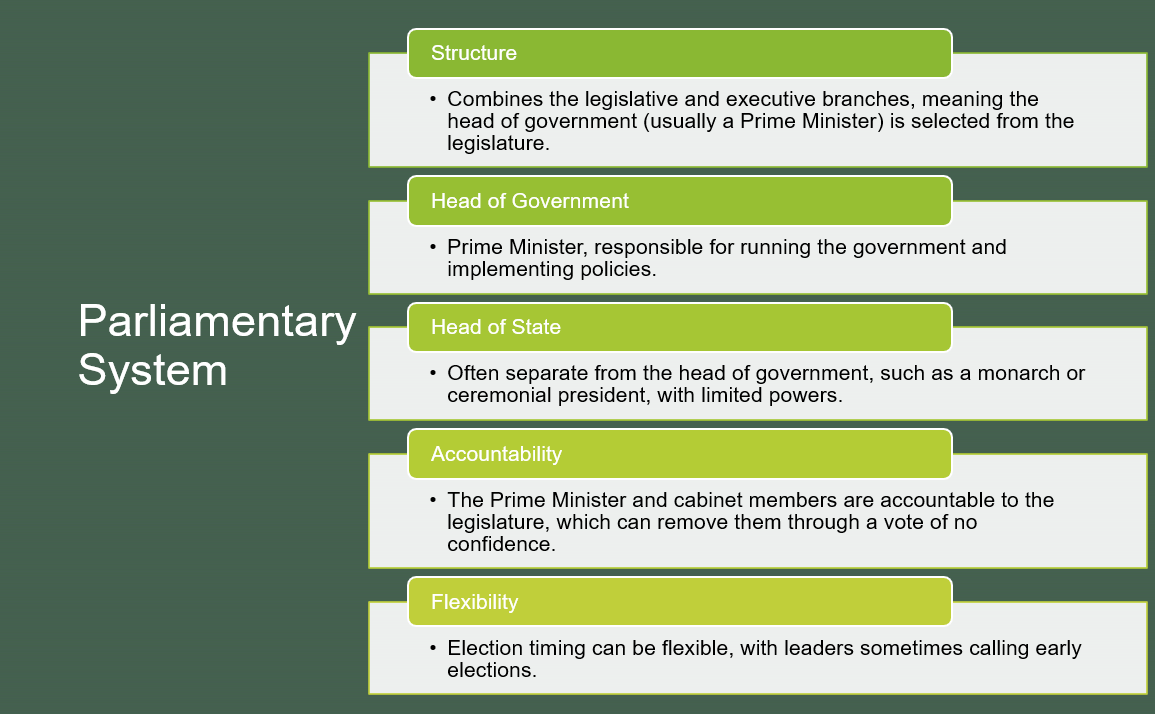
Parliamentary systems
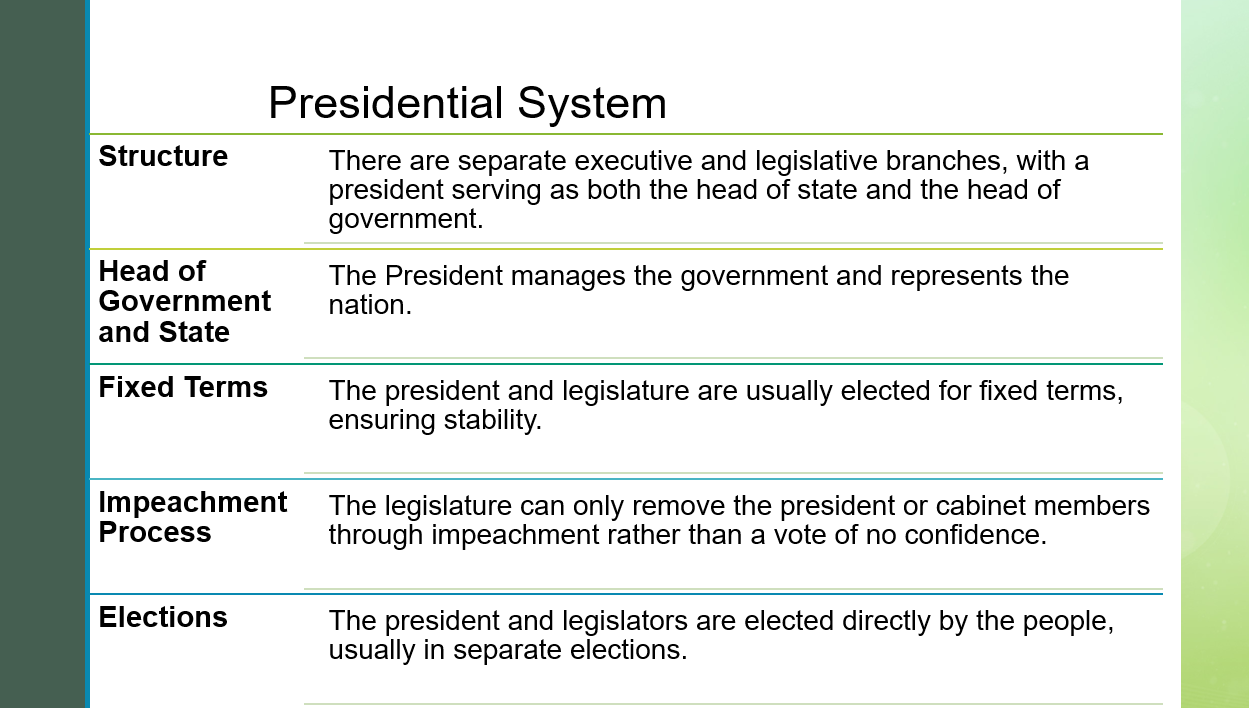
Presidential systems
Semi-presidential systems
Heads of state and heads of government
Executive institutions
Presidents and prime ministers
Cabinets
Legislative institutions
Congressional and parliamentary systems
Unicameral and bicameral legislatures
Judicial institutions
Courts and judges
Judicial independence
Executive-legislative relationships
Institutional checks on political authority
Formal and informal political power
Comparisons among the six required course countries
The College Board identifies parliamentary, presidential, and semi-presidential systems, along with executive, legislative, and judicial institutions, as the central content of Unit 2.
KEY CONCEPTS
How government systems distribute political authority
Differences between parliamentary, presidential, and semi-presidential systems
Selection and removal of political executives
Relationships between executives and legislatures
Legislative structure and policymaking authority
Judicial independence and political influence
Formal constitutional powers versus informal political power
Institutional similarities and differences across course countries
How political institutions support or limit regime authority
BEST FOR
AP Comparative Government and Politics
Comparative politics courses
Honors government courses
Political science electives
Direct classroom instruction
Guided notes
Class discussions
Student review and remediation
AP exam preparation
HIGHLIGHTS
Covers the required Unit 2 political institutions
Incorporates all six required AP Comparative Government countries
Supports comparative analysis and concept application
Helps students understand complex government structures
Provides organized, classroom-ready instructional content
Can be used for teaching, review, or AP exam preparation
Designed to reduce teacher preparation time
WHY FRISSON LEARNING SYSTEMS?
Frisson Learning Systems creates rigorous, classroom-tested educational resources that help students move beyond memorization and develop the analytical skills required for success in advanced coursework and high-stakes assessments.
Resources are created by an experienced social studies educator with a background in psychology, social work, gifted education, and Advanced Placement instruction.
PURCHASE THIS RESOURCE
This resource is purchased and downloaded through Teachers Pay Teachers.
Select the purchase link to view the complete product listing and purchase the digital PowerPoint presentation.
Purchase on Teachers Pay Teachers
SHORT DESCRIPTION
A comprehensive AP Comparative Government and Politics Unit 2 PowerPoint covering political institutions, government systems, executives, legislatures, judiciaries, and institutional comparisons across the six required course countries.
FULL PRODUCT DESCRIPTION
Teach AP Comparative Government and Politics Unit 2: Political Institutions with a comprehensive PowerPoint presentation designed to help students understand how political authority is organized and exercised.
Students compare the political structures and branches of government in China, Iran, Mexico, Nigeria, Russia, and the United Kingdom. The presentation examines parliamentary, presidential, and semi-presidential systems while helping students analyze the roles and relationships of executive, legislative, and judicial institutions.
Unit 2 is one of the most heavily weighted portions of the course, accounting for approximately 22%–33% of the multiple-choice score.
INCLUDES
Complete Unit 2 PowerPoint presentation
Detailed explanations of major political institutions
Content addressing all six required AP Comparative Government countries
Country-specific political examples
Comparative analysis opportunities
Visuals and organized instructional material
AP course-aligned vocabulary and concepts
Material for classroom instruction, review, and exam preparation
TOPICS COVERED
Political institutions
Parliamentary systems
Presidential systems
Semi-presidential systems
Heads of state and heads of government
Executive institutions
Presidents and prime ministers
Cabinets
Legislative institutions
Congressional and parliamentary systems
Unicameral and bicameral legislatures
Judicial institutions
Courts and judges
Judicial independence
Executive-legislative relationships
Institutional checks on political authority
Formal and informal political power
Comparisons among the six required course countries
The College Board identifies parliamentary, presidential, and semi-presidential systems, along with executive, legislative, and judicial institutions, as the central content of Unit 2.
KEY CONCEPTS
How government systems distribute political authority
Differences between parliamentary, presidential, and semi-presidential systems
Selection and removal of political executives
Relationships between executives and legislatures
Legislative structure and policymaking authority
Judicial independence and political influence
Formal constitutional powers versus informal political power
Institutional similarities and differences across course countries
How political institutions support or limit regime authority
BEST FOR
AP Comparative Government and Politics
Comparative politics courses
Honors government courses
Political science electives
Direct classroom instruction
Guided notes
Class discussions
Student review and remediation
AP exam preparation
HIGHLIGHTS
Covers the required Unit 2 political institutions
Incorporates all six required AP Comparative Government countries
Supports comparative analysis and concept application
Helps students understand complex government structures
Provides organized, classroom-ready instructional content
Can be used for teaching, review, or AP exam preparation
Designed to reduce teacher preparation time
WHY FRISSON LEARNING SYSTEMS?
Frisson Learning Systems creates rigorous, classroom-tested educational resources that help students move beyond memorization and develop the analytical skills required for success in advanced coursework and high-stakes assessments.
Resources are created by an experienced social studies educator with a background in psychology, social work, gifted education, and Advanced Placement instruction.
PURCHASE THIS RESOURCE
This resource is purchased and downloaded through Teachers Pay Teachers.
Select the purchase link to view the complete product listing and purchase the digital PowerPoint presentation.
Purchase on Teachers Pay Teachers